By Tour.af
Some travellers come to Afghanistan because of a photograph. A surprising number come because of a book. A paperback read twenty years ago, a travel classic passed on by a parent, a memoir that put a city on the map in someone's imagination: these are often the real starting point of a trip. If that sounds like you, it helps to know which books belong to which route, because each of the classic Afghanistan tours follows ground that someone wrote about well.
This is a reading list organised by itinerary rather than by author. It does not replace a guide on the ground, and it is not a claim that any route still looks the way it did in the book. It is a way to arrive with the right stories in your head. Current itineraries are on the Afghanistan tours with Tour.af page.
Kabul: an emperor's memoir and a guidebook that outlived its era
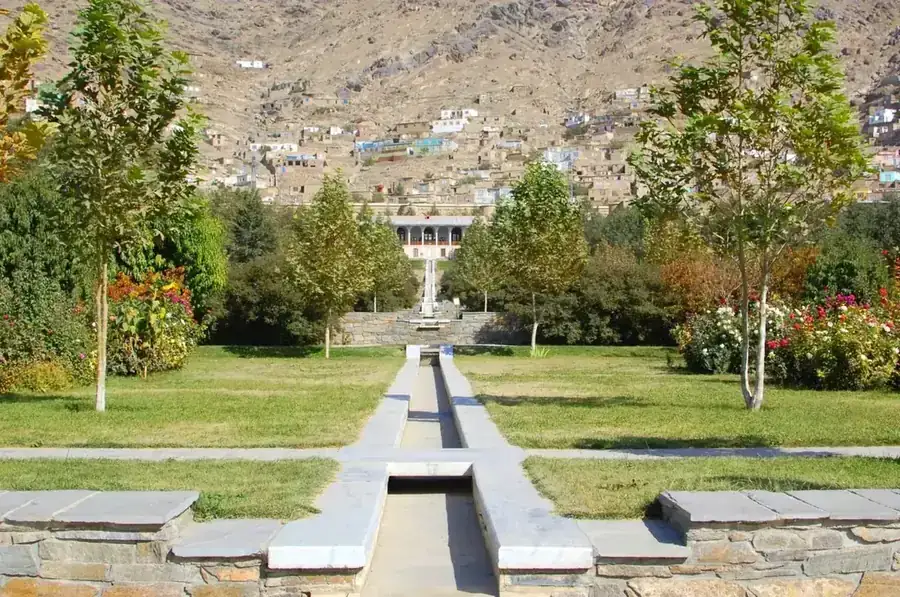
The Baburnama. Babur, the first Mughal emperor, took Kabul in 1504 and wrote about it with real affection in his memoirs: its climate, its gardens, its fruit, the hills around it. He asked to be buried there, and his tomb stands in the terraced garden now called Bagh-e Babur, in southwest Kabul. Reading even a few chapters before a visit changes the way the garden feels. It stops being a park and becomes the place a homesick emperor chose.
Nancy Hatch Dupree's guidebooks. Dupree wrote a series of guides in the 1960s and 1970s, including An Historical Guide to Afghanistan and a guide to Kabul. They are dated as practical guides, of course, but they are still some of the most careful descriptions in English of the country's monuments and what they meant. Many readers use them now as history rather than as directions.
A private Kabul week from Tour.af stays in and around the capital: gardens, museums, bazaars and short trips in the valley that return to the city each night. It runs on your dates from $1,599, and it does not include Bamiyan.
Bamiyan: a pilgrim's account from the seventh century
Xuanzang's record of the Western Regions. The Chinese Buddhist pilgrim Xuanzang passed through Bamiyan in the seventh century and described the great standing Buddhas in the cliff, still painted and gilded in his time. Few travel accounts let you stand in the same place as the writer across almost fourteen hundred years, and look at the same cliff. The statues are gone; the niches remain. Knowing what Xuanzang saw makes the empty space easier to read.
Dupree also wrote specifically about the Bamiyan valley, and her descriptions of the cliff, the caves and the fortresses above the town remain a useful companion.
Tour.af's Kabul & Bamiyan Classic is a seven-day small-group trip, maximum five travellers, from $1,590, covering Kabul's highlights, the Bamiyan valley and Buddha niches, and the lakes of Band-e Amir.
The Silk Road cities: Robert Byron's road to the Oxus
The Road to Oxiana. Robert Byron's 1937 account of his journey through Persia and Afghanistan in 1933 and 1934 is the classic for anyone heading to Herat and the north. Byron was chasing the origins of Islamic architecture, and his pages on Herat's Timurid monuments, the minarets of the Musalla and the mausoleum of Gawhar Shad, are among the most quoted in travel writing. He also travelled to Mazar-i-Sharif and Balkh. Read it for the buildings and the wit; do not read it for current practical detail.
Tour.af's ten-day Silk Road Highlights small-group trip, $2,499, follows the arc from Kabul to Bamiyan, then north to Balkh and Mazar-i-Sharif, finishing in Herat. The Silk Road Journey through Kabul, Bamiyan, Balkh and Herat is a distinct ten-day itinerary at $2,990.
The centre: a walk across the country in winter
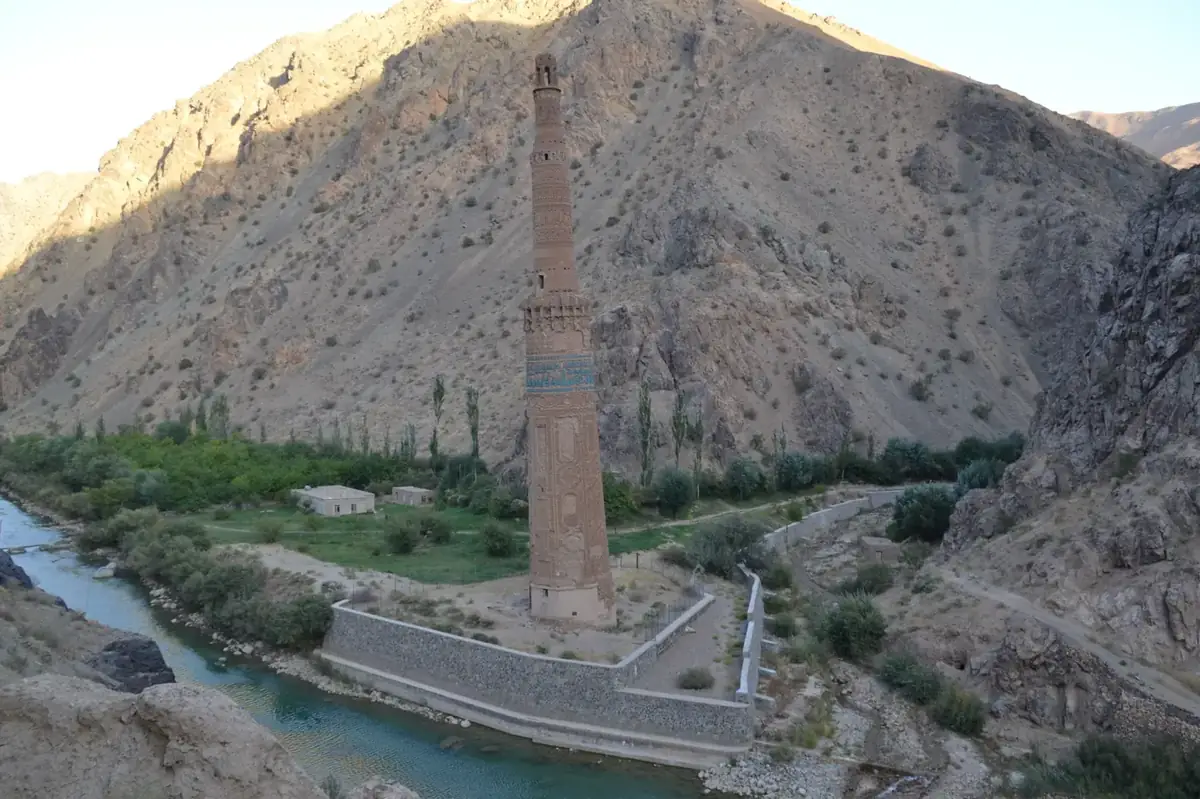
The Places in Between. Rory Stewart walked from Herat to Kabul in the winter of 2002, through the central highlands, past the Minaret of Jam and on towards Bamiyan. The book is about people more than monuments: villages, hosts, dogs, snow. It is not a route anyone should copy today, and current rules require foreign tourists to travel with an official translator, so independent sightseeing is not allowed. But it explains the scale and texture of the middle of the country better than almost anything else.
The east: Nuristan and a famously unprepared expedition
A Short Walk in the Hindu Kush. Eric Newby's account of his 1956 journey into Nuristan with Hugh Carless is one of the funniest travel books in English. Two men with very little mountaineering experience set out for the high valleys, and Newby turned it into a classic. It gives readers a feel for the green, steep valleys of Afghanistan's east.
Tour.af runs two itineraries that reach the east: Five Gems, ten days through Kabul, Bamiyan, Nangarhar, Kunar and Nuristan at $2,490, and the Eastern Valleys Explorer small-group trip at $2,199.
The Wakhan: Marco Polo and the source of the Oxus
The Travels of Marco Polo. Polo's account describes Badakhshan and the high plateau of the Pamir, which he crossed on his way east. It is a short passage, but it is the reason so many readers know the word Pamir at all.
John Wood's A Journey to the Source of the River Oxus. Wood, a British naval officer, travelled up through Badakhshan and the Wakhan in the 1830s and reached the lake he identified as the source of the Oxus. His book is the classic Victorian account of the corridor.
Tour.af's Wakhan & Pamir Corridor small-group trip runs from $2,990, with set summer departures and a maximum of five travellers. The Roof of Afghanistan Wakhan & Pamir is a longer-form ten-day itinerary at $3,990.
How to use a reading list on a guided trip
Bring one book, not five. Read the relevant chapter the night before a site, not on the bus. Tell your guide which book brought you; it often changes what they choose to show you, because a guide who knows you have read Byron will point out different things in Herat. Expect differences between page and place. Monuments have been damaged, restored and rebuilt, and some places in older books are now closed or limited.
The practical side of any of these routes, from the letter of invitation and permits to the e-visa, is covered in Tour.af's Travel to Afghanistan guide. The books supply the stories; the itinerary supplies the access.
Tour.af, Ahmad Shah Baba Mena, Kabul 1012, Afghanistan. +93 70 521 4101. WhatsApp · tour.af
Written with AI assistance and reviewed by Tour.af against its published tour pages.